

What role do trees play in building healthier, more resilient cities in the face of climate change?
That was the question explored during a fascinating public lecture hosted by the Botanical Society of South Africa (Kirstenbosch Branch), in collaboration with SANBI, on 4 June 2026. The event, attended by the Woodstock Residents’ Association (WRA) Green Portfolio, featured two of Cape Town’s leading voices on urban trees: Francois Krige and Clare Burgess.
Francois, owner of Krige Tree Services, is well known for his work in tree care and has helped maintain some of Cape Town’s most iconic trees, including those at Kirstenbosch National Botanical Garden and the Arderne Gardens. I first met him during a guided walk at Platbos Forest, where he shared his passion for restoring indigenous forests and the intricate relationships that make forest ecosystems thrive.
Clare Burgess is a landscape architect, lecturer at CPUT and chair of Treekeepers, a voluntary organisation dedicated to conserving Cape Town’s urban trees. She also contributes her expertise to community greening projects in areas such as Khayelitsha, helping create healthier and more welcoming public spaces.
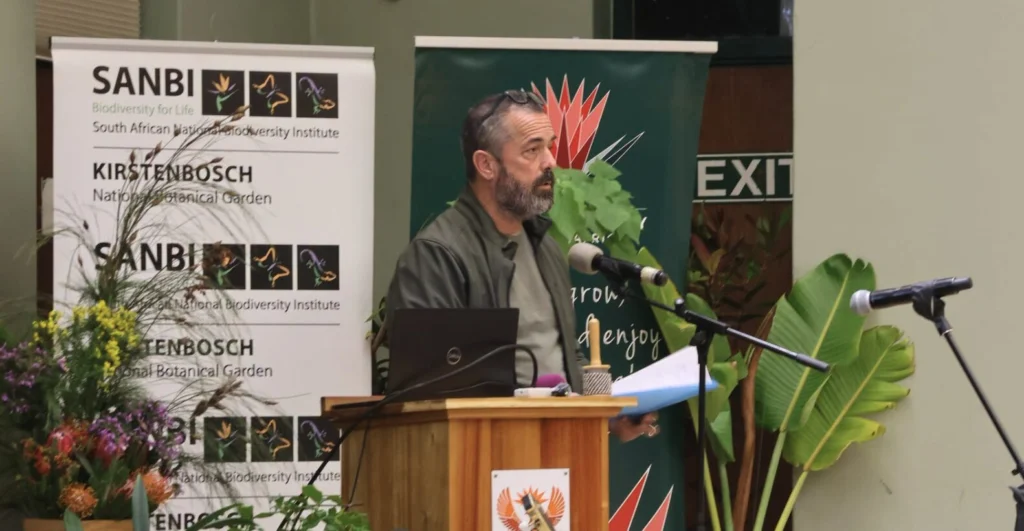
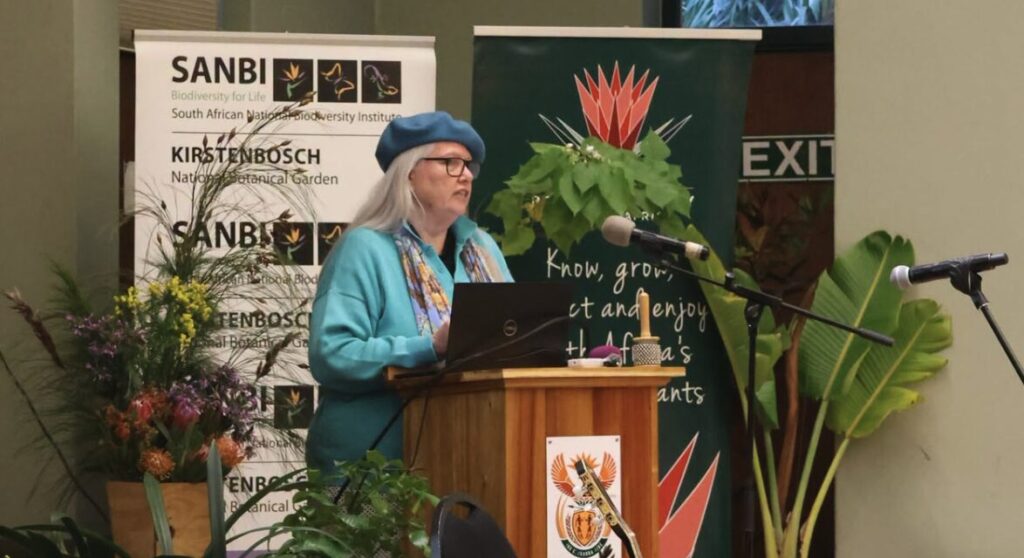
One of the evening’s most powerful messages came from Clare’s presentation on the value of urban trees. Research has shown that streets shaded by mature tree canopies can be significantly cooler than those without trees, making them increasingly important as cities face rising temperatures. She also highlighted inspiring greening initiatives around Khayelitsha Hospital, demonstrating the positive impact that trees can have on both people and the environment.
Francois offered an equally thought-provoking perspective on choosing trees for urban spaces. Rather than framing the conversation as indigenous versus exotic species, he explained that successful urban planting depends on selecting the right tree for the right place. Disturbed soils, limited rooting space and changing climate conditions all influence which species are likely to thrive. He also reminded the audience that trees naturally grow as part of interconnected ecosystems, reinforcing the importance of creating larger, connected green spaces wherever possible.
The lecture served as a prelude to the Tree Talk Seminar, taking place from 8–9 September 2026, where researchers, practitioners, municipalities and community organisations will come together to share knowledge on planting, caring for and managing trees for a greener future.
Community organisations such as the WRA have been warmly invited to participate, and the Green Portfolio will certainly be there. We also encourage residents to look out for public tree-planting events during National Arbor Week (1–7 September 2026). Every tree we plant today is an investment in a cooler, healthier and more resilient Woodstock for generations to come.
Do you see a spot in Woodstock that you think deserves some greening? Submit a Tree Planting request HERE to get more trees in the neighbourhood!