
It’s Thursday. If the familiar rumble of the municipal refuse truck has’nt reached your ears yet, your neighbourhood WhatsApp group probably has. Time to wheel your black bin onto the pavement. We all know where that rubbish is headed: the landfill.
South Africans generate an estimated 122 million tonnes of waste every year, and our landfill sites are filling up fast. But there is another stream of waste that quietly leaves Woodstock every day. It’s the recycling placed in clear bags on our pavements, collected by a different truck operated by Waste Want, a Cape Town-based, youth-owned waste management and recycling company.
Like many Capetonians, I like separating my recycling. Having grown up with a grandmother who was raised on a farm in the Kalahari, I learnt early that everything has a use and nothing should go to waste. That philosophy has stayed with me. Discarding something and calling it waste has never felt quite that simple to me.
When I moved to Woodstock five years ago, I was pleased to discover the Woodstock Depot, where residents can drop off recyclable materials such as plastic, glass, paper and cardboard. But one question kept nagging at me: What happens next? Once I drive away, how do I know my recycling doesn’t end up in landfill anyway?
Curiosity eventually led me to a community recycling festival in Brackenfell, where I finally found the answers I had been looking for. The event brought together organisations working in recycling and environmental education, including WESSA, PETCO and Waste Want. It also highlighted the challenges faced by a nearby community that had lost regular waste collection services and had resorted to burning household waste.
While helping local children collect litter around their neighbourhood, I met Portia Sam, one of the senior supervisors at Waste Want’s Philippi Materials Recovery Facility (MRF). She answered the question that had been bothering me for years.
Yes, the recycling collected at Woodstock Depot really does continue its journey.
The depot acts as a collection point, where recyclable materials are first sorted before being transported to Waste Want’s main Materials Recovery Facility in Philippi. Portia kindly invited me to visit the facility and see the process for myself.
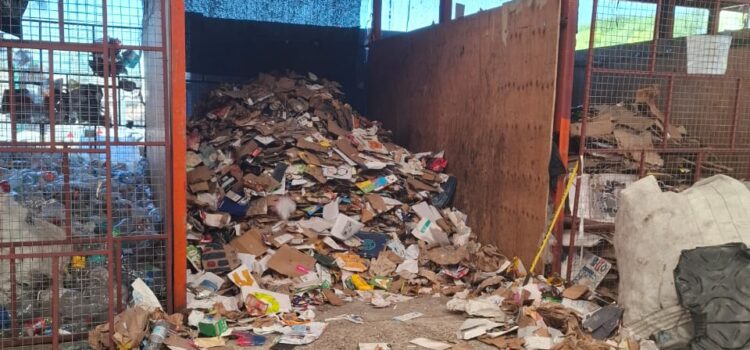
Walking through the MRF was both fascinating and sobering. At first glance I was greeted by what looked like a mountain of recyclable waste. Portia told me it had actually been much larger only a few days before. Every day, more trucks arrive from collection points across Cape Town and from the clear recycling bags residents leave on the pavement.
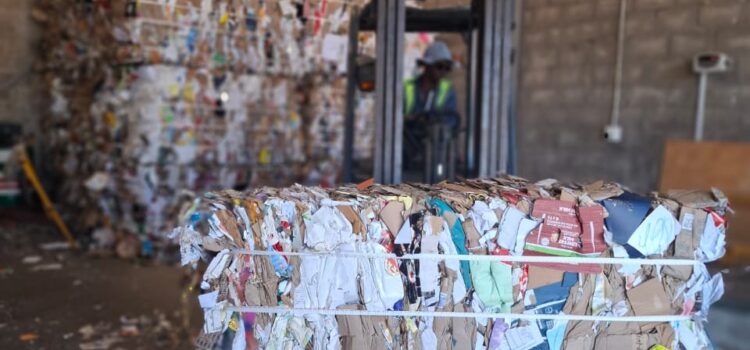
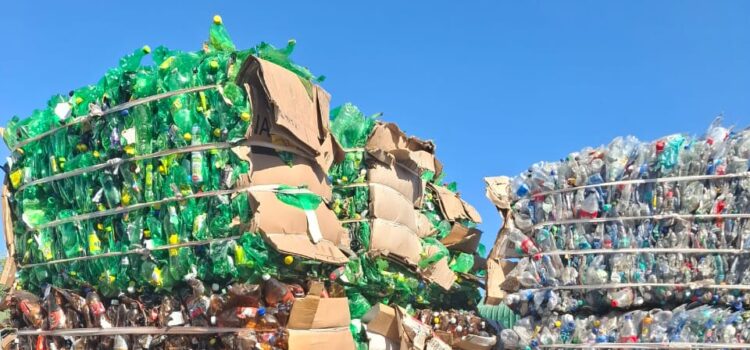
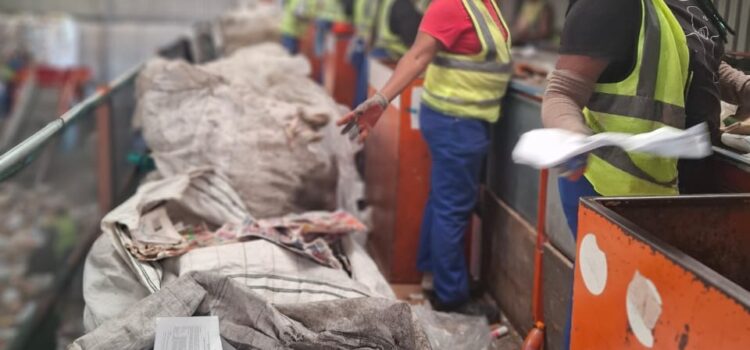
Inside the facility, conveyor belts carried recyclable materials past teams of workers who expertly sorted everything by hand. Cardboard, steel, plastics, paper and glass each found their way into separate streams. Powerful baling machines then compressed the materials into enormous blocks, ready to be sold back to manufacturers who use them to create new products.
This is the circular economy in action.
Waste Want does not charge residents to collect recycling. Instead, the company generates its income by selling these recovered materials back into the manufacturing chain, ensuring that valuable resources remain in use rather than being buried in landfill – or burnt otherwise.
Portia also showed me the final destination for the small percentage of material that cannot be recycled. Compared with the mountains of recoverable material, it was surprisingly little. It was reassuring to see just how much waste could be diverted from landfill when households separate their recycling properly.
I left Philippi feeling hopeful. South Africa still has a long way to go, with only a small percentage of household waste being recycled. Yet there are dedicated people working every day to keep valuable materials in circulation, often behind the scenes and without much recognition.
For Woodstock residents, recycling is one simple but powerful way to make a difference. Every bottle, cardboard box, yoghurt tub or tin that is correctly separated at home helps reduce landfill, conserve natural resources and support a growing circular economy.
If you’d like to recycle through Waste Want, you can collect their clear recycling bags from the Woodstock Depot or arrange to receive them directly. Simply place your recycling in the bags and leave them on the kerb for collection, or drop them off at the depot yourself.
Sometimes making a difference starts with something as small as putting out the right kind of bag on a Thursday morning.
Vilien is one of the Greening Champions for the Woodstock residents Association – if you would like to reach out to her for any Greening initiatives in Woodstock please contact us at [email protected] and we’ll put you in touch!